The Twelfth Age of Humanity
The Second Age of Kings is the twelfth known age of humanity, or the habens, by the reckoning of the scribes. Some say it is the thriteenth age, including the pre-ancient time of the Honai, the first humans who left Mirabillis even before the First Builders arrived.
These ancients left behind their wild children, who were the hunter-gatherer primitives enslaved by the Elar K’ras’thk Dominion, or First Builders. The progeny of the once-enslaved race are today called honai or habens by the other races, referring to themselves as humankind.
The most prolific of the races in terms of expansion and conquest, their numbers are second only to the Ghorsht, or orckind. The reckoning of the scribes and the keeping of the great archives by humans and elves traces more than thirty-thousand years of history for the known realms.
Those who reckon by the Herald that travels through the sky each year, and count the ages by the appearance of the Prince with the Herald every thousand years enumerate the ages of humankind by this thousand-year term and begun their keeping of time after the Day of Providence, when the elves and their gods along with the new human deities and humanity rose up and cast the First Builders down. By that timekeeping - called Cunning Reckoning the present age is the twenty-seventh.
The image below names the ages kept by Scribe Reckoning.

psionics and magic
in the known realms
mind powers
Psionics, "mind powers", or psychic abilities are not rare on Mirabillis, but neither are they prolific. Certain races are more prone to have these abilities - such as elves, especially the blue and metallic elves. Humans and Yunni populations have more psychics than other races except for the elves and fay. That said it is possible for any living, intelligent being to express psionic abilities, which are considered natural and latent.
Psionic or psychic abilities are NOT magical, and stem from the processes inherent within a sentient creature's mind and body. Some sages believe all the races are potentially psychic but most individuals have not been activated.
Magic
Magic is a mysterious universal force that affects reality. This force is contacted or tapped into using a range of methods uncovered ages ago.
Whatever tradition or techniques are involved, the working magician channels the Great Magical Agent and/or its subservient forces and energies, commands them to perform certain works, then releases the same forces or energies until he or she next needs to work with the Magical Agent.
Methods for connecting with the vast magical continuum and applying its forces vary across cultures and traditions. Spoken, chanted, or sung incantations are often used, though magicians may opt for discretion and recite these spells internally. A wide range of seeminlgy mundane objects and items, from stones and crytals to plants, animal parts, metals, sunlight, moonlight, water from the stream or ashes from the fire can be deployed symbolically to tap into some corresponding magical energy and thus gain the desired magical effect.
Wands and staves are a favorite utility for many magicians but these are not required for magical work. Various other objects can be and are also used, from jewelry or weaponry to any number of other things an individual spellcaster might use to focus and channel his or her willpower into the magical currents.
Note, this does not mean an object for channeling is required to use magic. Many spell-workers use nothing but their mind and body to channel magical currents. In some cases items make the task easier or even prevent harm to the magic-user when extreme forces are interacted with.
Famous schools of arcana such as the Gray Tower and the Mysteries of the Mist lodge in Mistamir have taught the Art for centuries. In the 1400s, Second Age of Kings the Gutherian monarch outlawed unauthorized magical practice in the Three Kingdoms. This royal mandate remains in effect and has forced magical organizations to disband or operate in strict secrecy.
Divine MAgic
Divine magic is its own category of magic that operates on similar, unknowable mechanics but is granted by the gods and goddesses to those who serve them. It has been speculated that in fact the same Magical Agent is at work here, and the divine actors simply act as intermediaries on behalf of their faithful, eliminating the need for those same faithful to learn the ancient philosophies and methods normally required for magical work.
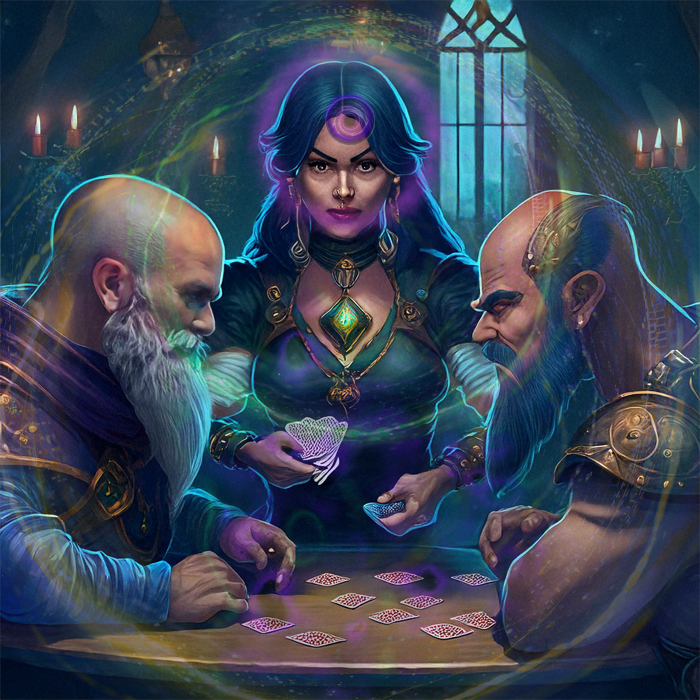
A human psion, Del Zdanin deals cards for two Duarden at the Fat Griffon Casino in Exquistia.
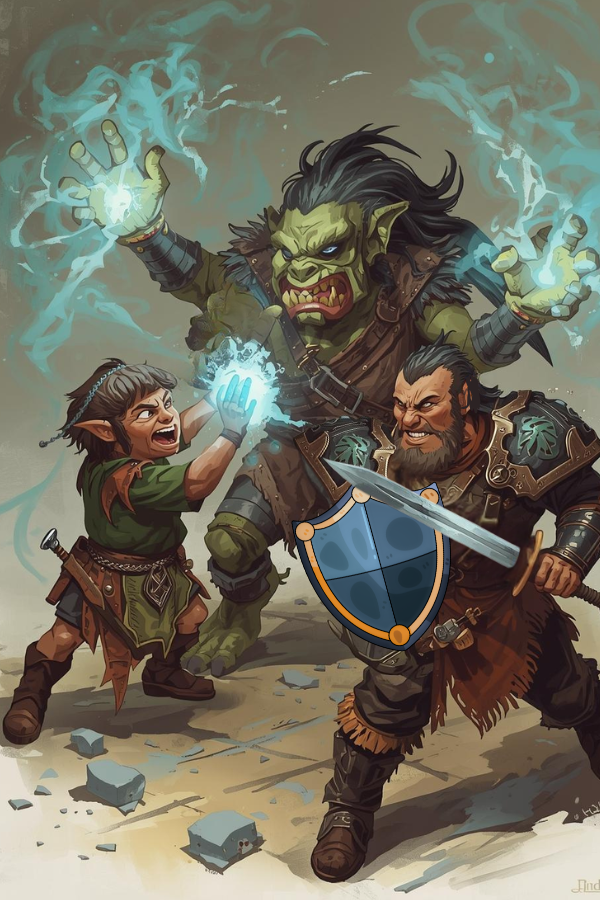
The Yunni psionicist Berd battles the half-orc goblin king M'zail as the Yunni warrior Jnar considers his options.
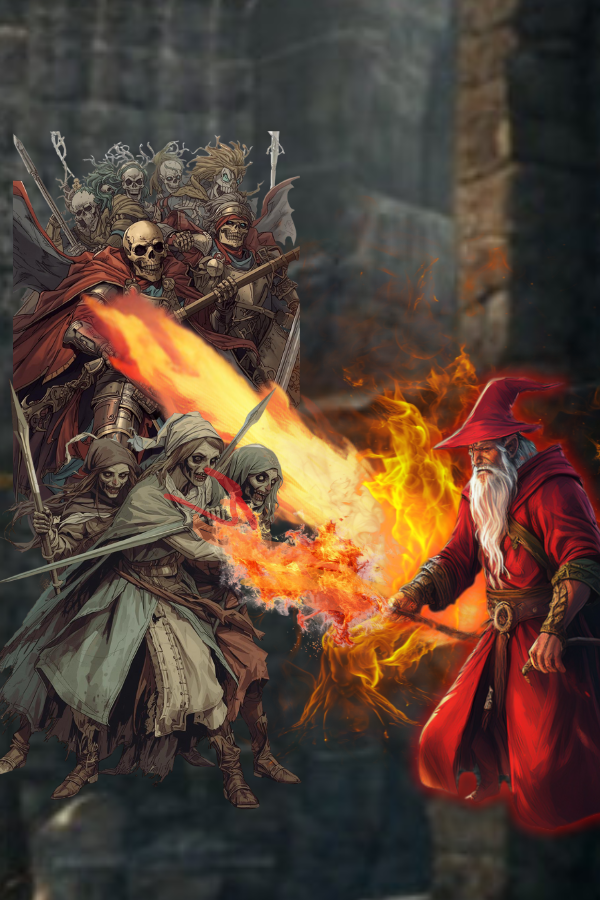
Izgabar the Red in the Dead Keep battling the Sisters of Mar B'haz.
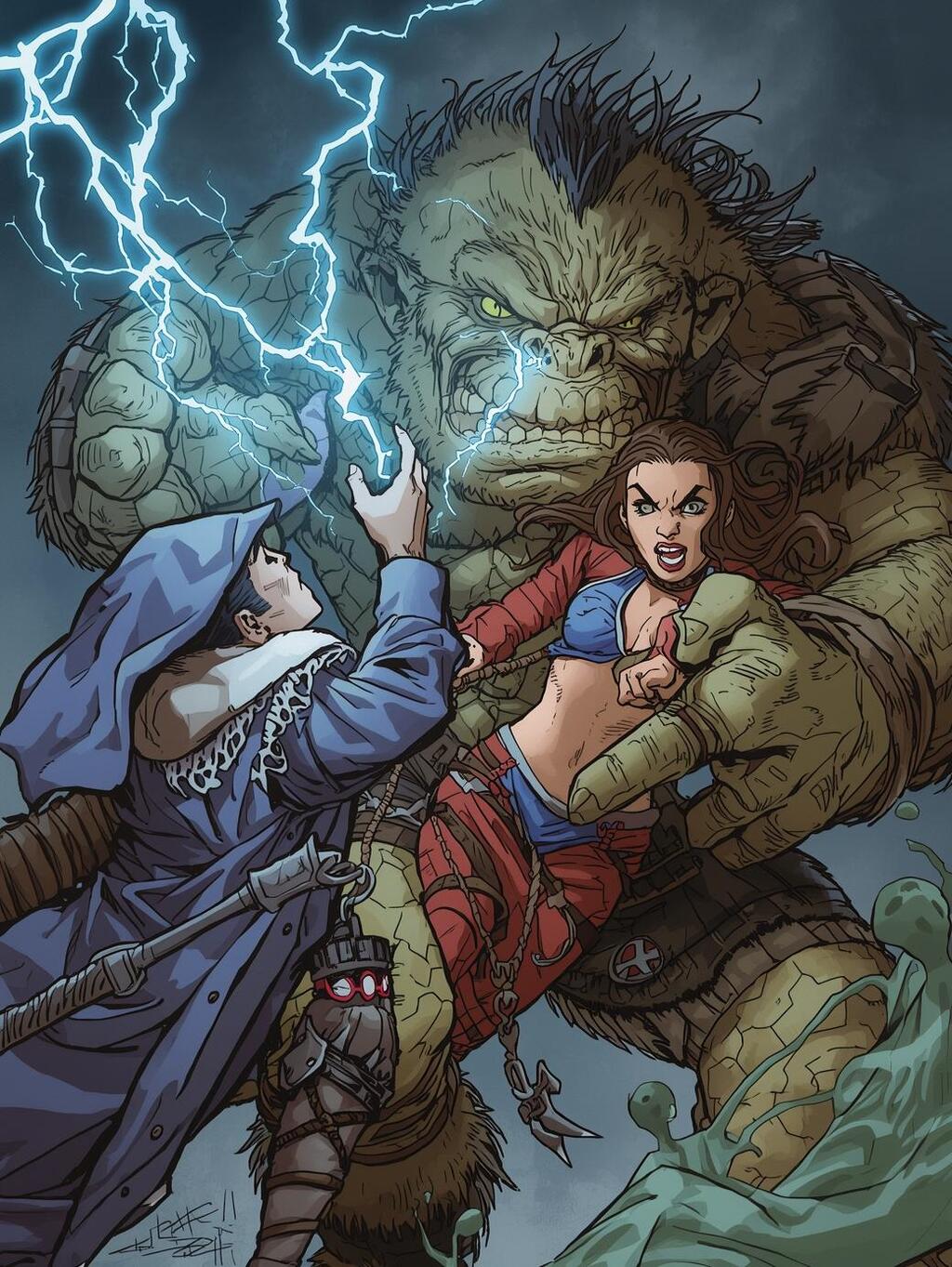
Teldin the Lonely conjures lightning to save the seeress Tephyr from a cave troll.
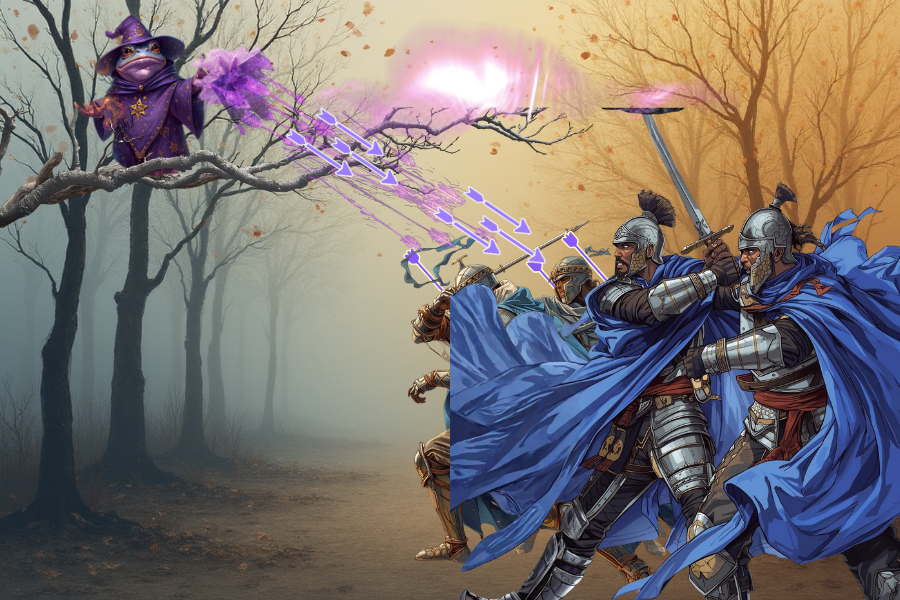
Pidwermin sends magic missiles into the Gutherian soldiers in Bertrand's orchard.
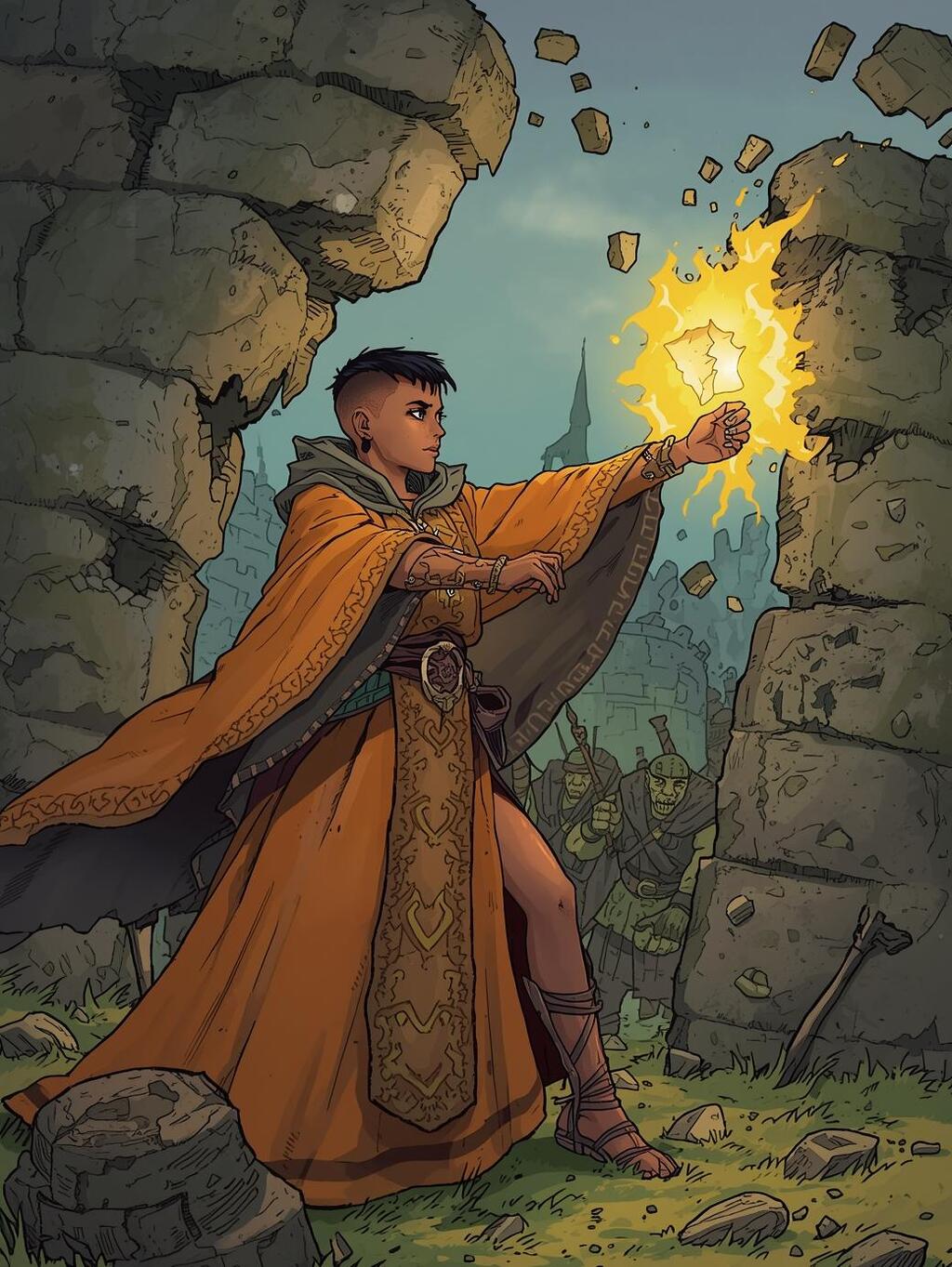
Jezza the Pursuivant of Kepplan destroying the outer wall of Kasbah Skullhorn.
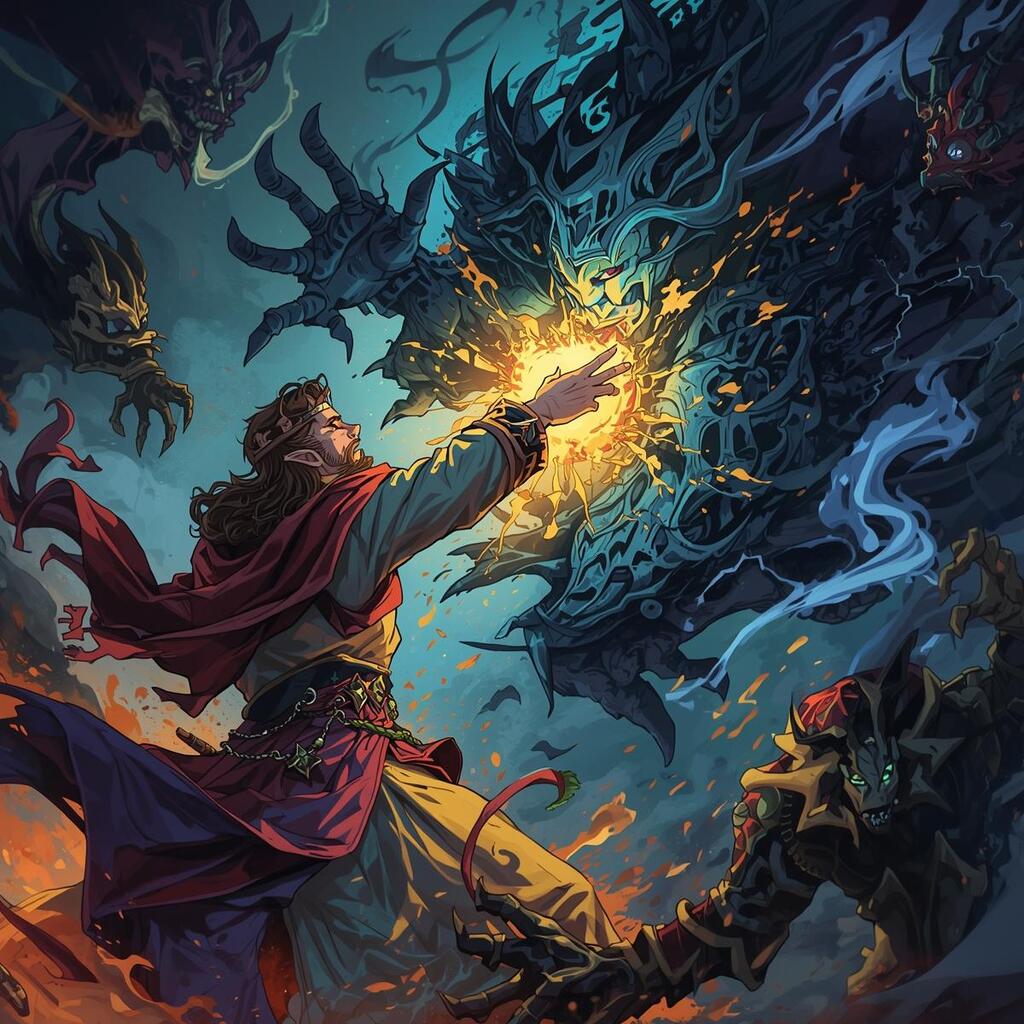
A cleric of Ostandd, God of Order works divine magic against a chaos shadow.
Epic Metals
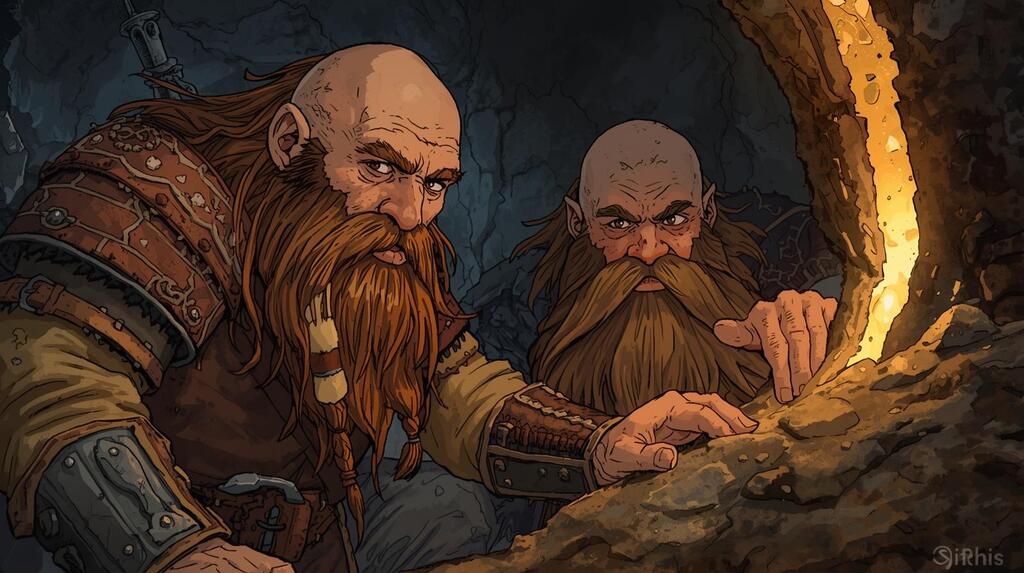
Two Duarden examine a vein of adamantite.
Adamantite and Sky Iron
Adamantite is the hardest metal known to Mirabillis, requiring magical fire and diamond tools to forge. Known only to the dwarves to ages, the habens traded for the knowledge in the past few thousand years.
It makes weapons and tools that are incredibly sharp and impossible to break. Adamantite is about the same weight and density as steel.
Though extremely rare, it may be the most abundant of the legendary metals. Weapons, armor, and tools of this make have circulated throughout the realms in small numbers, and any Duarden smith likely has at least some of this ore on hand.
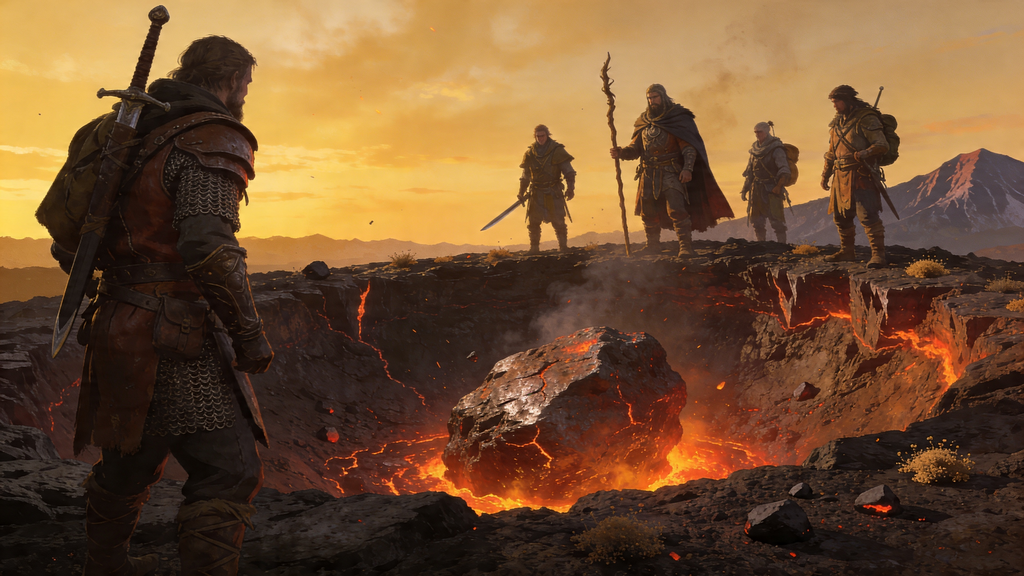
Sky-iron is so named because it falls from the sky.
Sky Iron
It was the humans who first harvested and forged the steel that falls from the heavens. Immediately this gift from the divine smith Aededstah was found to be harder than steel yet ligther than steel or wrought iron.
Highly durable armor, weapons and tools are made from iron from the sky. This metal can be used to fashion extremely sharp blades and the edges of sky iron cutting tools seems to never dull.
Sky Iron also lends psychic sensitivity, granting ESP, premonition, or other abilities. It also conveys a spiritual awareness whereby one may see or hear spiritual beings, communicate with them, and take on a more spiritual view of the world. This metal is believed to be linked to the Annunx, celestial beings in the service of all gods.
Vizuvisite
Humans eventually traded Sky Iron implements to dwarves in exchange for the secrets of Adamantite forging. Soon thereafter Sky Iron and adamantite were combined to create Vizuvisite, which means "union of sky and earth".
Vizuvisite retains the traits of both adamantite and sky iron. The alloy results in unbreakable tools and can hold an edge forever; it also lends psionic gifts and transcendent awareness.
Steel of the Union not only grants psychic abilities, it channels and conducts them, allowing the user to enhance or weaponize psionic energies. Vizuvisite metal can also protect the wearer or user from magic, as it can dispel magical fields upon command.
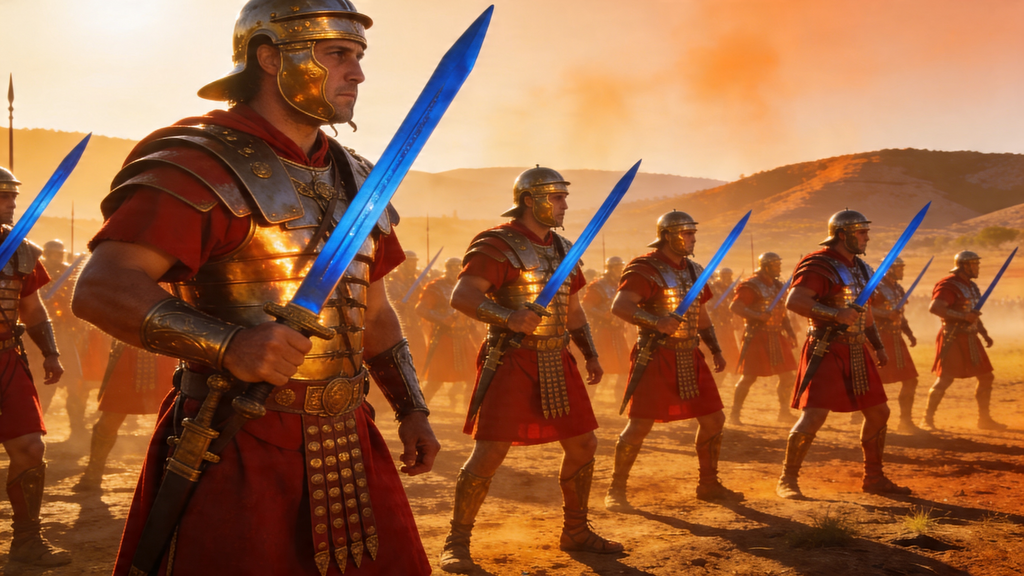
Baaltari soldiers with blue steel swords.
Blue Steel
Among the later triumphs of human metallurgy is the alloy now known as blue steel, first developed along the Arm. The metal’s origins trace back to cobalt deposits uncovered in the region’s copper mines—at first valued only for pigments. Everything changed during the Age of Dragons, when a violent clash between two wyrms left a vast pocket of cobalt melted and fused into strange new forms.
According to long‑circulated accounts, a shrewd mine‑owner with military connections recognized the opportunity. He eventually struck a bargain with a young dragon, securing her fire and skill to help refine the cobalt‑rich ore into a new breed of steel marked by its unmistakable blue sheen.
Blue steel surpasses ordinary steel—and even sky‑iron—in hardness, though it still falls short of adamantite’s legendary resilience. Its cobalt content grants it extraordinary resistance to heat, which is why heroes who battle fire‑breathing dragons are so often depicted wielding weapons forged from this alloy.
The metal does not rust, tarnish, or decay. Tools and arms made from blue steel remain pristine without oiling or polishing. More importantly, the alloy is toxic to undead and necrotic beings; a single strike can cause such creatures to rot, unravel, or collapse.
Blue steel carries a deep, resonant hum when struck—a vibration scholars attribute to its crystalline structure. This tone is harmless to most folk, but Varrine, goblins, and giants find it painful or disorienting. In practiced hands, a blue steel blade can fracture weapons made of bronze, common steel, sky‑iron, luminathite, or even Ithildrin.
Adamantite remains immune to breakage, but blue steel can set an adamantite weapon vibrating so violently that its wielder may faint or become sickened.
Where sky‑iron heightens spiritual or psychic sensitivity, blue steel acts as the opposite: a perfect grounding agent. It can wound ghosts, wraiths, demons, and other half‑substantial beings, preventing them from slipping into invisibility or shifting forms. A blow from blue steel forces unseen foes into visibility.
Psionic forces—telepathy, telekinesis, and similar mental arts—are weakened or nullified in the presence of this alloy. While it does not dispel magic broadly, it disrupts psychic fields with ease.
Because of its flawless resonance, blue steel is also used in fine instruments. Tuning forks, bells, drums, and even stringed instruments crafted from it are prized for their clarity and uncanny tonal purity.
Although many blue steel weapons have survived into the modern age, most reside in the vaults of powerful states or in the private collections of those wealthy enough to guard them from thieves and treasure‑hunters.