Page Contents
For those who understand such things, Mirabillis is the name of the great orb, or planet on which the vast oceans and varied lands of the realms - known and unknown - were placed by the gods of creation long before the ages of the Habens, Duarden, or Ghorsht.
The word "Mirabillis" translates roughly to "place of wonders" or "amazing/wonderful world" in the ancient language of the Honai, or early humans. It's true there were many amazing things set on these lands by the divine Architect and many astonishing things have been built by thinking beings since then.
There are many more wonders beneath the ground and in the sea. The first wonder is without a doubt the drama of the heavenly theatre overhead.
No celestial spectacle was spared when the creator gods took to their canvas and clay to fashion the skies of Mirabillis!

The orange sun, often called Salo or Saeir, and his brother the witness Vathor, the distant red sun.
There are two fiery stars in the skies over the known realms. The first, the day star is a great orange ball that chases away the darkness each dawn and the second - the constant witness - is a smaller, distant star that glows red like a lantern day and night.
The first sun's warmth and light sustains all life, growing the crops and the forests by its rays. With its motion through the skies each year it provides the four seasons.
To many he is a father among the gods giving courage, justice, and wisdom. HE has many names, among them Salo and Saeir.
His full cycle is one year or 360 days.
The second sun is the witness and watcher, seer of all and keeper of the constant vigil - a distant red sun - smaller than the first but in its place overhead day and night. It is also the guide, unmoving in the sky all year long, used by navigators to find the true way.
This witness is called Vathos, and he is the brother of the orange sun. All that he sees he reports to his brother so the father may judge with truth.
Where in the sky the red sun sits depends on the observer's latitude. In Narwald it is almost exactly overhead at the top of the sky dome. In Gutheria it is positioned further north, still high but not directly overhead. In southern Ziliador the red sun is high above the horizon to the north. On the Burning Sands it sits close to the horizon but still a few handspans from the line. From south of the Kivu forest it is just above the horizon, and from the Tangled Canopy south of the Kivu the red sun sits exactly on the northern horizon line. In the southern realms past the great jungles the red star is never seen, for he was not set in the sky on their behalf.
The witness star has a 60-year cycle during which time it reaches its brightest and lowest point. At the 30-year mark Vathos is at his brightest, and the period of growing light is tied to construction, high energy, and bold endeavors. At year 60, the sun is at its dimmest point, a faint red dot overhead.
It is said during the dimming that Vathos rests. He never fully sleeps and watches still, yet he is weary from all he has beheld and is less alert during this period. At this time astrologers and priests urge caution, for deceivers attempt to capitalize when the witness rests briefly.

The Mother Moon (left) and Daughter Moon (right)
Two moons also dwell in the palace of the sky. The sages at the Wise Towers and elsewhere say this is the symmetry of nature and divinity manifesting in the celestial theater.
Nature is often represented by a Mother and the sphere of the sky depicted as a Father. These are but two roles expressing the grand duality of polarities central to magic, spiritualism, and wisdom of the worldly ways.
This duality is expressed in the sun and moon dichotomy as well and perfectly so with two distinct spheres in both the masculine and feminine aspect. Whereas the two suns are a father and his brother, the two moons are the mother and daughter.
The mother moon is often, but not always, the largest object in the night sky. He pale surface is tinged peach and copper along the edges as she rules over the nocturnal phase of the 22-hour day and commands the tides. He cycle from new, to waxing and full, then to waning and finally new once more lasts 30 days, the exact length of one month.
The daughter moon is smaller and seemingly erratic. Sometimes by her mother's side and often nowhere in the dark canopy. She moves quickly, her course through the sky easily tracked with the naked eye. She helps her mother govern the tides and the instincts of things that move in the night and her entire cycle lasts only nine days.
The mother and daughter moon appear together and separately and may rise and set at different times through the month. Sometimes one or both are visible only during the day or in the small hours of the morning just before dawn, and other times they shine from sunset to sunrise. Upon closer study they are each quite predictable once the cycles are known. Such is the way of the heavens.
The people of Mirabillis understand the word "planet" because it is used to describe many of the amazing, dramatic objects in their sky every day and night. Great orbs that vary in size and color with the time of year, there are six planets in the heavens above the realms. The planets are seen sometimes at night as large luminous discs or as titanic beings larger than the mother moon. Other times they are visible during the day, perhaps as ghostly, half-visible orbs or maybe appearing as substantial spheres with colorful clouds streaked across their surface. Sometimes these planets have with them smaller companion orbs.
These planets are understood by most to be avatars of heavenly or cosmic beings, storehouses of a god's celestial power, or focal points for prayer or magic that channels divine and cosmic energies. These and other stars in the heavens are used to foretell events, interpret omens, know the nature of a child when it is born, and even conjure and bind the spirits of the Other Realms.
Some smaller stars are arranged in constellations that represent heroes, deities, or natural forces and others move alone through the sky dome as the seasons change. The planets, stars, and even the two moons -- mother and daughter -- shift and move in constant cycles.
The great orange sun also sails higher during the summer and lower during the winter and the intensity of his heat changes accordingly. The father in the sky, he is more stable than all other heavenly figures except for one.
The watcher and witness, brother and advisor to the primary sun, the red lantern and second sun is visible both day and night. He moves to a higher and lower point in his heavenly abode but his journey is slow and constant. In a sky of breathtaking beauty and sometimes terrifying enormity, the witness star is the great stabilizing constant.

According to the Wise Towers in Baaltar, Mirabillis is one of eleven planetary bodies in the heavens, and is the fourth planet from the sun. The lay person does not necessarily understand the idea that Mirabillis is but another planet in the heavens like the gods and avatars they see in the sky above them. Nor do they comprehend the small companion orbs that accompany the planets as children or siblings are moons of those planets just as the mother and daughter are the moons of Mirabillis. Such knowledge tends to circulate only in high academic and sometimes magical circles.
Each heavenly orb corresponds to an aspect of divine and natural order and is linked to various gods/goddesses across cultures. The other ten heavenly bodies, all visible with the naked eye at varying times of the year and under certain circumstances are listed below along with their religious or astrological correspondences. There are, of course, many religions across the realms and by no means does this list apply to every culture.
The planets as god-forces has been widely adopted since the days of the Baaltari Empire, which ended 1,824 years prior to the time of this writing. The planetary-divine associations have grown in popularity with the adoption of standard 12-month calendars.
Mirabillis to those who grasp the concept of their home world as another planet among the ten above, Mirabillis corresponds to the nature pantheons, sky gods, sea deities, and the four elemental domains (earth, water, fire, and air) and their associated spirits. Learned magical practitioners do sometimes invoke the spirit Mira in magical work. This is similar to the earth idea of communing with Terra or Gaia.
* Astrological information above is taken from the commonlore of the northern realms and midrealms which is largely informed by the combined and syncretized beliefs of the old Guth-Umbrige amalgamation and later influences of the Baaltaran Empire and post-Imperial feudal order.
The formal calendar used throughout the Three Kingdoms, and widely recognized elsewhere, the Gutherian Calendar is a twelve-month system rooted in astrology and named after the influential signs and deities associated with each period1.
| Month | Astrological Influence | Major Holidays & Events |
| Virelai | Renewal and Vitality | New Year (1st), Spring Equinox (1st) |
| Amoura | Love and Union | Lover’s Eve (7th) |
| Mercain | Commerce and Speech | Kepplan’s Carnival (8th) |
| Navros | The Voyager or Explorer | The Wandering (5th–8th) 9, Summer Solstice (1st) |
| Kulwrath | Warrior and Protector | Juniper Tournament (5th) |
| Solenth | Victory and Celebration | Sun Festival (1st–10th) |
| Jexir | Challenger and Trickster | Fool’s Day (11th) Fall Equinox (1st) |
| Thaloré | Justice and Harmony | Fortune Festival (4th) |
| Velmura | Harvest and Fulfillment | Weights & Measures (10th) Harvest Feast (14th) |
| Chronai | Time and Cycles | The Life Look (15th) , Winter Solstice (1st) |
| Hearthun | Home and Family | Cheer Home (7th–10th) |
| Nemoris | Death and Passage | Dressing the Tomb (3rd–8th) |
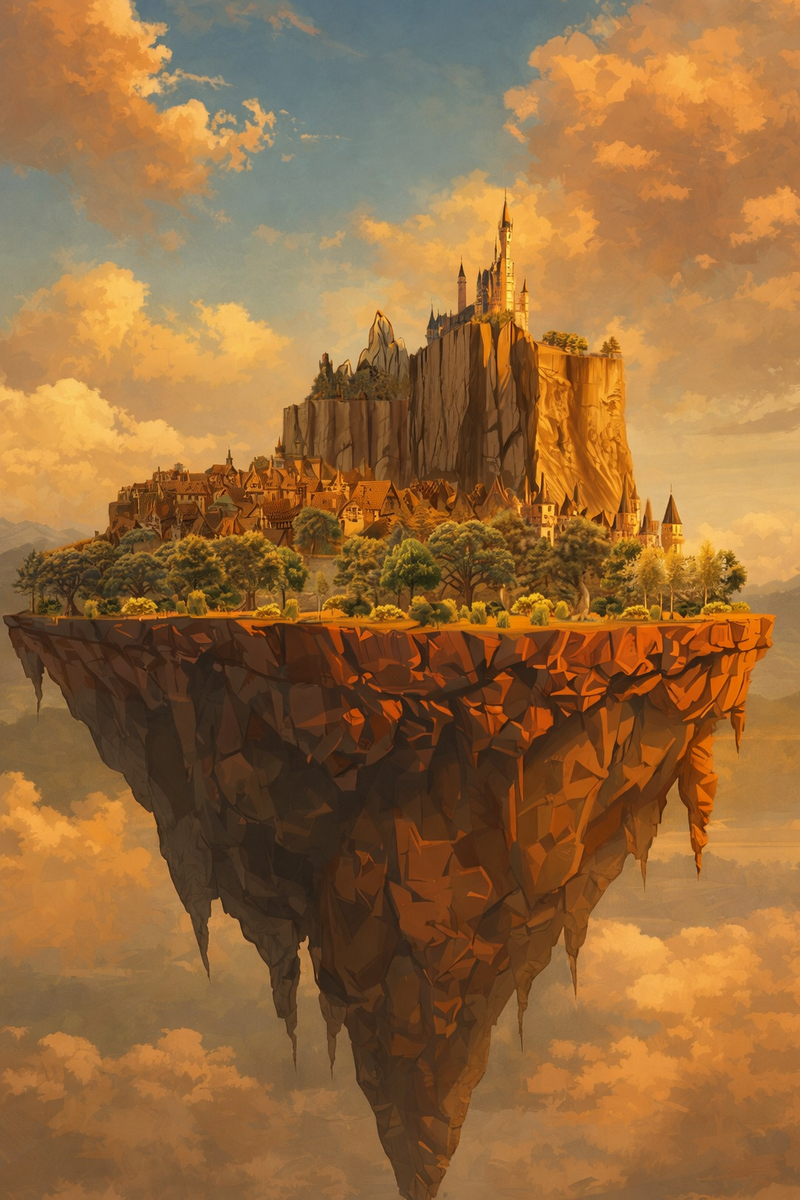
The Flying City of Tristique was once part of Maer Dane.
The known realm is graced with five flying settlements. These are cities, and in one case a kingdom. magically raised from the ground and caused to hover permanently. They are capable of airborne navigation as well, meaning they can be flown about wherever the authorities see fit to travel.
Most cities have adopted a general vicinity to inhabit, but all of them move at some point and for various reasons. Such is the freedom of living in the sky.
The five flying settlements of the known realms are listed below in their order of ascent.
Before the Age of Freezing, in the Golden Age, which began 15,000 years before the present, the Archives tell us there were scores of floating castles and cities across the realms. At the dawn of the Age of Dragons these soaring settlements were utterly destroyed by the Draquali and the newly born dragonkind.
While not perfect, like in these flying settlements approaches utopian. The concern of invading neighbors has all but evaporated.
Crime also is largely a thing of the past. Most trouble makers were simply thrown off - literally - early on and since then the criminal bloodlines have gone dormant or reformed.
The flying cities maintain a loose confederation but each settlement is autonomous. They take little interest in the affairs of those below, and are thus dubbed the "aloft aloof" in many circles.
They wield no political influence over the nations on the ground and have little impact on the daily lives of most of the population. They do serve as a compelling reminder of what is possible, and are in many regards inspiratonal.
It is possible to migrate to one of these airborne locales under certain circumstances and visitation is always welcome, even encouraged. Tourism is the driving economic force for all of these settlements.
Auld Ur or the Old World sits on the western end of the Sea of Sollum. It is home to the Six Kingdoms of Guthall, Averine, Biadnaphea, Odele, Ellenor, and Shalunas.
These are technically vassal states of the Gutherian Throne. To comprehend fully the situation we must first address the voyage of many Guth people out of the Old World.
In 1412 Second Age of Kings, in the wake of a devastating plague (the Blight) that killed hundreds of thousands, Ghueslar I, then King of the Guths and Lord Protector of the Six Kingdoms, left a viceroy in Guthall and took 60,000 of his people - 40,000 military, 5,000 nobles, and 15,000 commoners - on the great pilgrimage to the New World of Merak Tiridium.
The Sea of Sollum stretches roughly 1,500 miles between Auld Ur and Merak Tiridium. Incredibly, and seen as a boon from the Shining Father, almost no Guths were lost on the voyage.
Ghueslar I signed a treaty and transferred a sum of gold to the king of Maer Dane in exchange for a small territory in the north, bordering Grandlin. Having control of the productive mines in the Old World, Ghueslar had no trouble buying a small kingdom and subsequently raising a mercenary force to supplement his own battle-hardened military.
A failed attempt to invade Myrrha was considered a setback by the desperate monarch, for he had promised his people a vast new domain. Through brilliant and decisive military planning he and his son managed to seize parts of Maer Dane and North Grandlin within a few months, as well as defend themselves against a joint counterattack from kings in the region.
Mass migration of Guth families followed and continued over the centuries as expansion of the new Gutherian kingdom gradually progressed.
Through centuries of warring and steady progress, much of the present-day Three Kingdoms were conquered. Jeslinan III finished what his ancestor began by taking Ziliador in 1761 2nd Age of Kings and the last of Maer Dane in 1802 2nd AOK.
This monarch vowed publicly to restore the might of the Guth people, using the growing religious fervor of the Church of the Shining, which purports to serve the one true god Galadine, to full effect. He has raised a massive, fanatical military to this end and proven himself to be a master of both military strategy and political maneuvering.
In 1805 2nd AOK - 19 years before the published stories began, The Golden Lion, Jeslinan III shocked the realms by annexing the Daverium Peninsula, the mining and banking heart of the known realms. Daverium had been independent of any monarch since the fall of the Baaltaran Empire.
The mining and banking families controlling the area had been autonomous for millennia prior to imperial conquest, and have even married directly into the imperial line thereafter. The Daverium family still shares blood with Baaltar and had extensive mutual defense pacts with city-states along the arm; such treaties proved fruitless as none sought to challenge the Gutherian king's claim.
An attempt to poison Jeslinan III when he visited Daverium in a bold political show of force resulted in the culling of regional bloodlines and the passing of power directly to the king's most loyal noble houses.
Combined with the mining and minting institutions of the Old World, the Gutherian Throne now has access to virtually unlimited wealth and influence plus a very real ability to strangle the economy of the known realms at a whim.
Geography and topography of Mirabillis runs the full spectrum of potential environments. A vast oceanic system dominates the surface, but there are continents spanning across both the northern and southern hemispheres.
This is the large continent on the east of the Sea of Sollum and west of the Baaltaran Sea and the eastern ocean of Del Amaranthi. It is the home of the Three Kingdoms and Myrrha, where much of the current story begins.
In the farthest northern realm of Narwald epic mountain ranges loom above frozen tundra and small evergreen forests. The ocean around and beyond Narwald is called the Endless Deep because there is no dry land to be found farther north. The sea stretches on and on until eventually becoming an ocean of ice.
South of Narwald where the Northern Ocean meets the Western Sea are the Old World or First Realms to the west and Three Kingdoms to the east, separated by the Sea of Sollum, or aforementioned Western Sea.
Note there is some potential for confusion where the term "north" or "northern realms" are used. Narwald is considered the far north and is generally less likely to be a conversation piece among the populations south of the Endless Deep.
The term "northern realms" then, almost always refers to the northmost region of the mainland, or main continent of Merak Tiridium that also contains the mid realms, the Arm, Dirus Foedus, the Great South, and those wild and mostly unknown territories of the Mesubee Chubeth, or Tangled Canopy.
The archaic term the "lower north", abandoned by all but academics and the occasional highly refined traveler may be used to set the Three Kingdoms and neighboring regions apart from Narwald.
Between the mainland Three Kingdoms and Narwald are also the isle of Myrrha and the far eastern province of Kutawazi. The Isle of the Wizard Born once sat upon these same waters, before it sank in the year 1,980 in the Age of Empires.
These lands are as varied as the people and political systems that sit upon them, with various types of mountain ranges, deciduous and evergreen forests, grasslands, and scrub plains. Freshwater systems include natural lakes ranging from a few hundred feet across to twenty miles across and a plentitude of rivers and tributaries.
In the midrealms are the largest of the grasslands and scrub plains, with additional mountain regions and some smaller forests further south in the mid regions.
The eastern reaches of the midrealms contains the long peninsula known as the Arm, dotted with city states and the genesis of the old Baaltaran Empire. These lands are often mountainous with treacherous plains and hill country between the ranges and fewer forests than the northern realms.
South of this is Dirus Foedus, the mostly nonhuman region of kingdoms and nations ruled by orcs, hobgoblins, and other races. This stretches below the Arm to the Wailing Coast, ruled by the Unliving and inhabited by human and other people generally hostile to the values and ways of life found elsewhere in the known realms.
The Great South is home to the old desert kingdoms, beyond which are the largely unexplored rainforests and jungles that are part of human and orcish ancient origin stories.
There are tropical islands inhabited by barbarians in the southern part of the western ocean and also in the eastern sea beyond the Wailing Coast. Goju Dagam is a subtropical island chain inhabited by the parent races that later seeded Kutawazi.
Also called the Ancient South and the Great Desert, this region begins southwest of the Scorched Barrens where the Burning Sands follow the coast of the Sea of Yamm Uhit into the kingdom of Nimarat. This small but influential kingdom controls the larger seaports of the region. Inland the harsh desert is home to the semi-nomadic tribes of Ozhaben and the harsh lands of Tanridah. South of Nimarat are the two dominant, rival kingdoms of Izrad and Sarda, the uncontested powers of the deserts. Smaller kingdoms to the south survive in the shadow cast by the two rival giants.
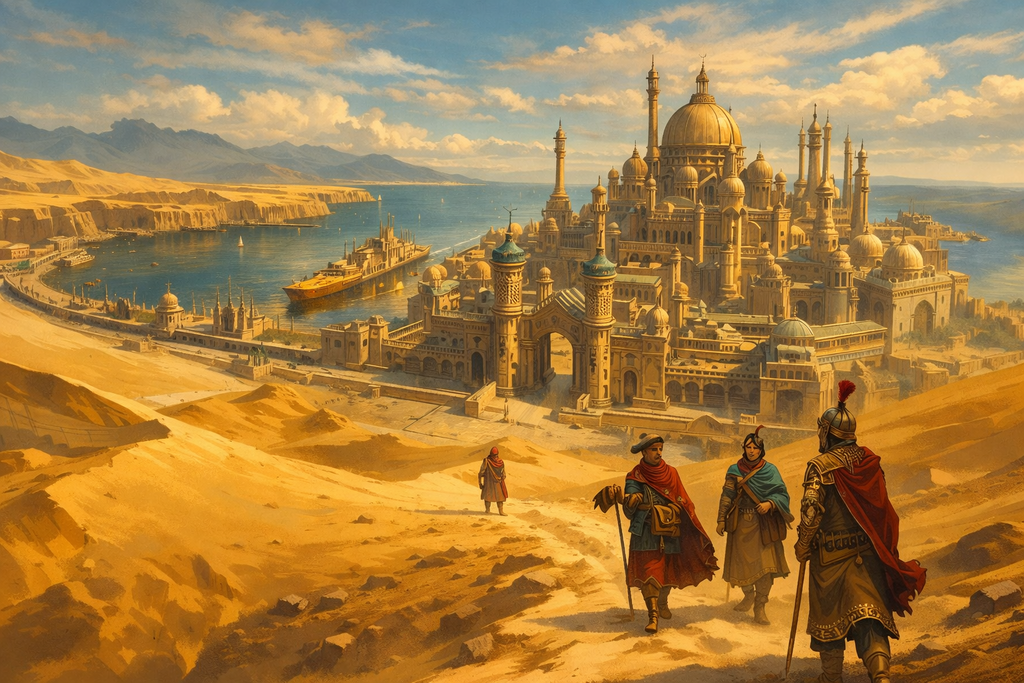
The Nimarati port of Dunehaven
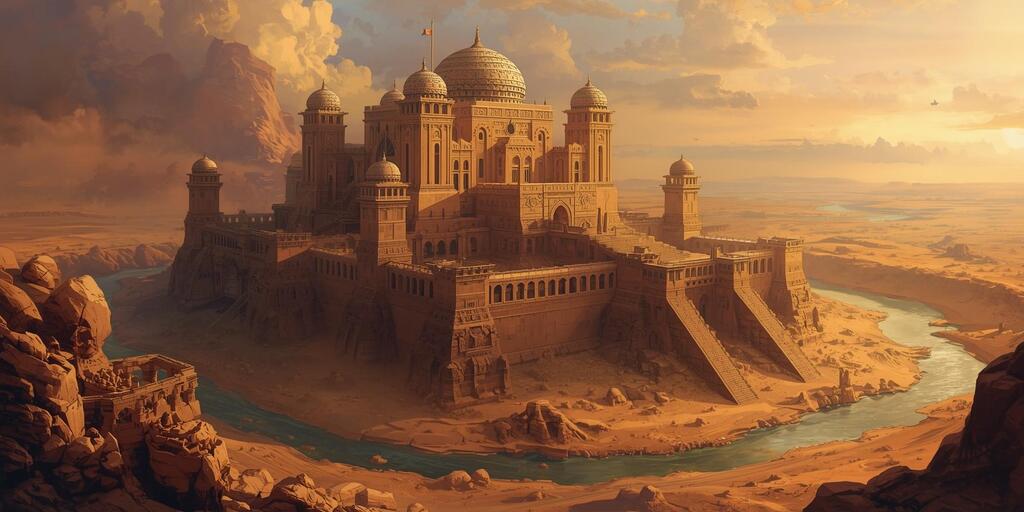
The Holy City of Izrad
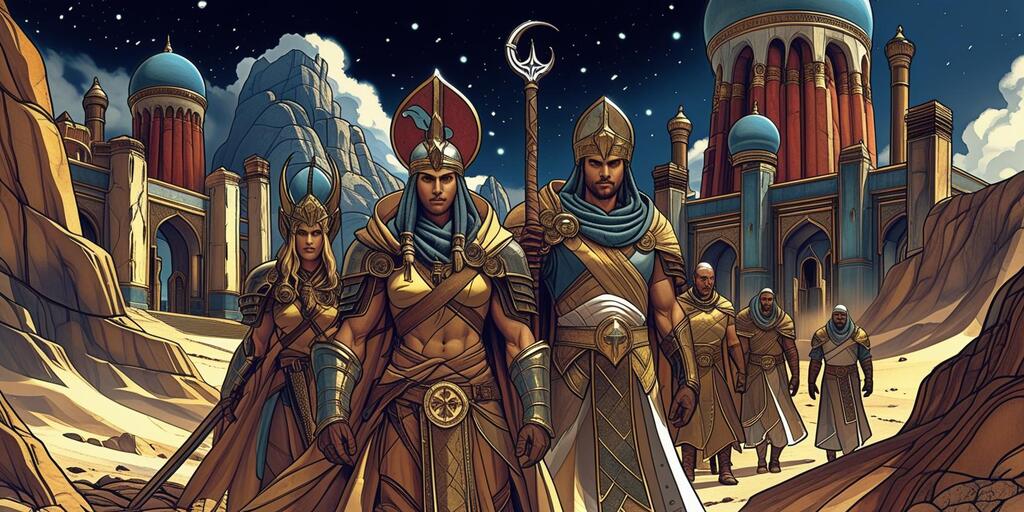
Izradite Priests and Soldiers
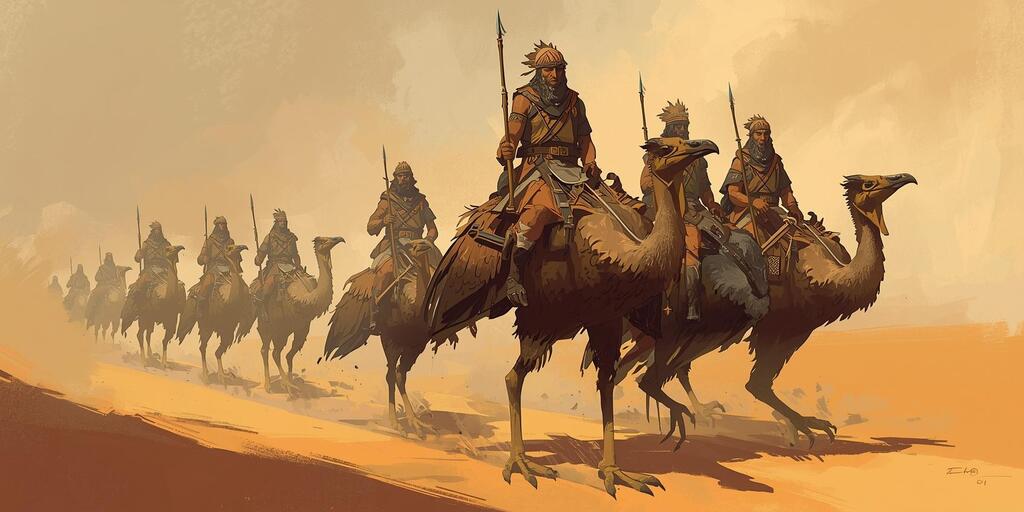
Warriors of Sarda Riding Genuiz
The Alkar, or elven races came to Mirabillis long ago from other worlds as part of their Zeinavrethiel, or eternal quest to seed the elven people across the stars. Humankind and orcs were slaves and food for the First Builders when the elven people arrived; a vote was cast and some Alkar moved on while others stayed. Those who remained helped humankind and the orcish people cast off their masters and claim the world upon which they were born for themselves.
There are many Alkar races. Some are descendants of the Orathiem, the ancient first elves who left long ago to seed new worlds. Others arrived later along their Trail of Sojourns as they sought young worlds on which to build new tribes and peoples.
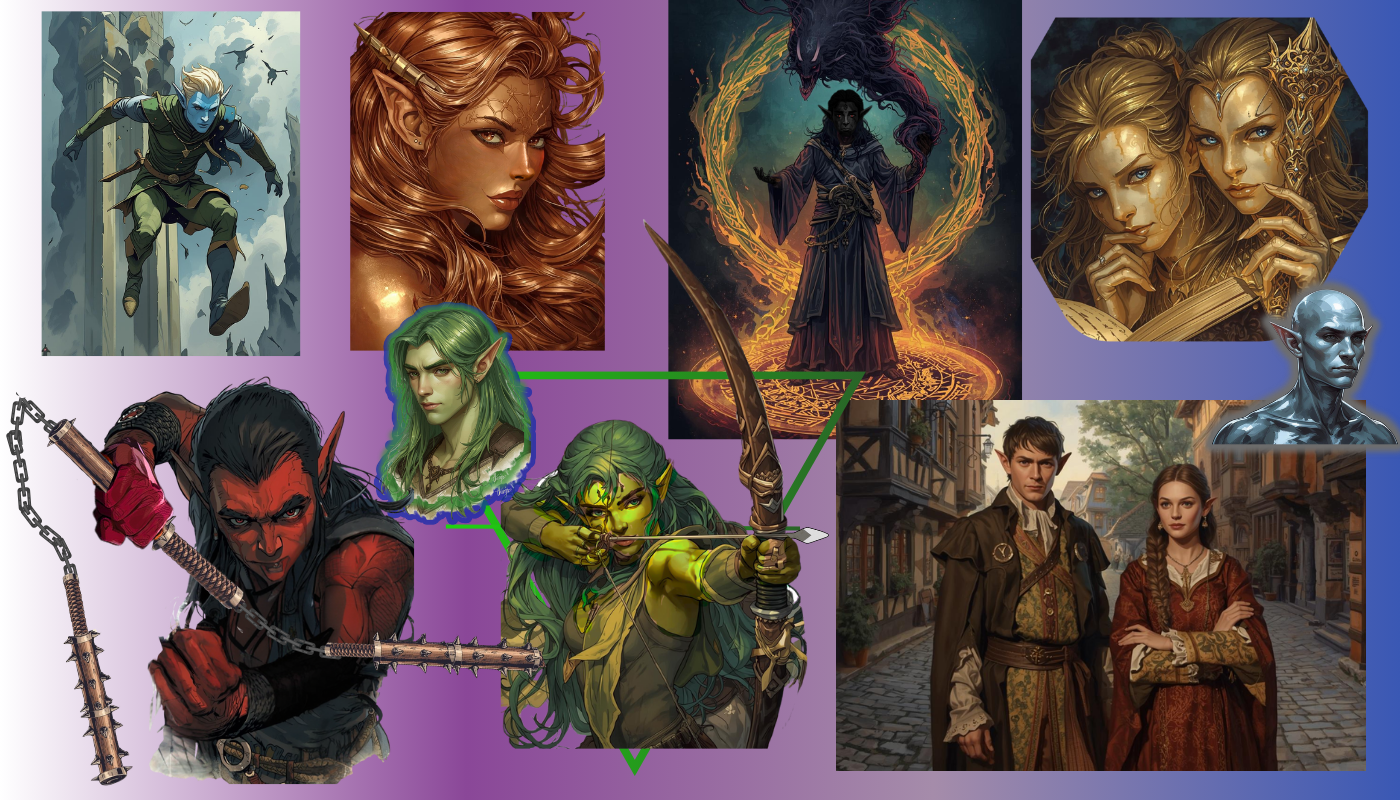
The elves of Mirabillis are of variant races with differing cultures and dispositions towards other races.
The humans, or habens of Mirrabilis developed an ingenious method and system of archiving and preserving their histories over vast spans of time. The first part of this system are of course the Scribes. This order of sacred compilers and keepers sometimes recruits from the most talented historians and chroniclers of the realms, but is primarily a path of the initiated by bloodline.
Scribe families meticulously record the varying histories of the people and happenings realms wide and a fanatical guardian force is tasked with protecting the historical documents. Along with potent ancient magic given to the Scribes by the Wizard Born, specialized structures and enshrining methods collectively known as the Archives have preserved the realms' history for more than 20,000 years.
The college at Ostium uses a specially prepared oil to suspend records in an airless state. Scrolls are laminated with walnut and druseed oil, coated with beeswax, then wrapped in animal bladder and thin parchment. These protected documents are then placed into refined frankincense resin and sealed into chests of laminated pottery.
The chests are then sealed with the resin and beeswax and their exteriors completely coated with the same substance. The treated chests are placed within a stone cistern, which in turn is filled with vegetable oil plus special ingredients. The cistern is sealed with a stone lid, cemented with pitch, and the contents are safe from air, moisture, insects, and calamity for millennia. Protective magic passed down through the order of Scribes is applied throughout the archiving process and as a final step for added protection.
Archives are opened at regular, rotating intervals - times only known to the order of Scribes. The contents of the opened archive are copied and replaced and the original records are distributed to libraries, colleges, and governments. It's an excruciating process but one that insures the long history of the realms will not be lost.
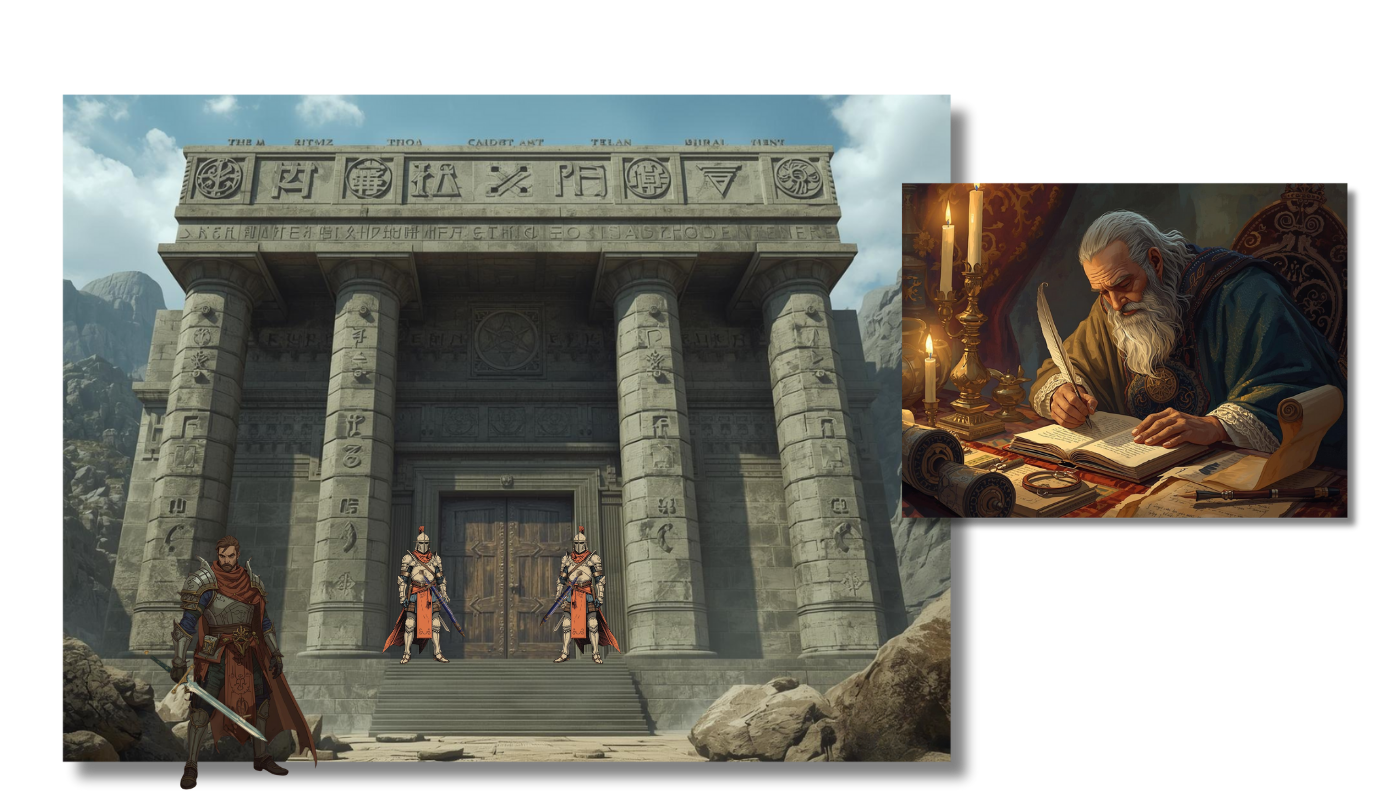
Archives at Ostium with Guards. Also pictured is a scribe at work.
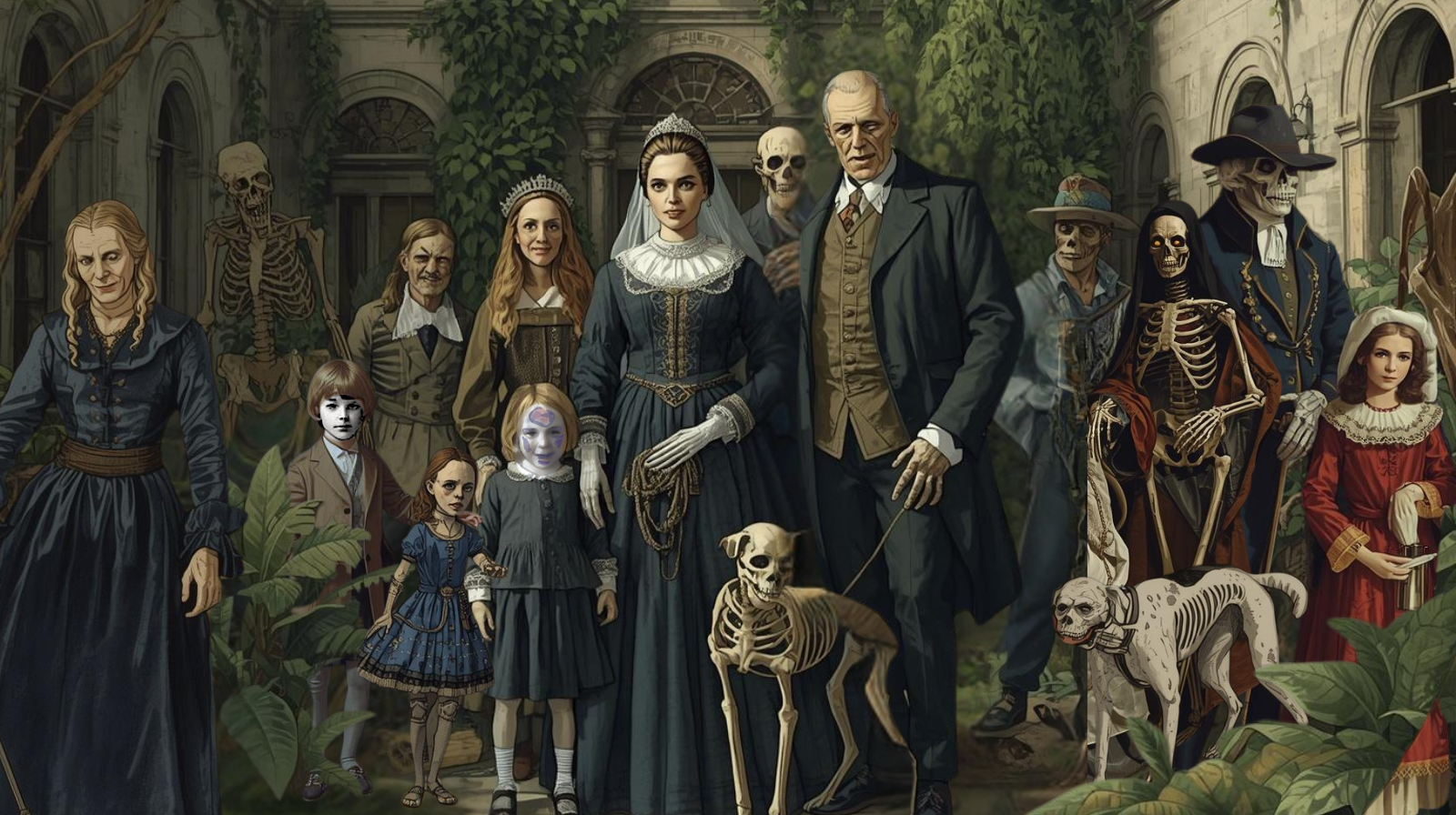
The Dead Nobility of the Wailing Coast are not undead, yet nor have they passed from the world of the living.
The dreaded Dead Nobility of the Wailing Coast rule over their living kingdoms with apathy or cruelty. Some among the decaying peerage have little interest in the things of this world and seldom issue decrees or even come out of their tombs. Others are active haters of life and the living world they are stranded in.
An ancient curse predating most of the kingdoms of the known realms binds these noble bloodlines, even after death, to their manors and stations for all time. These are not undead creatures like zombies or even vampires - their p0wer far exceeds such beings.
The great paradox is thus: While they are somehow bound to a mimicry of their former life, as the dead they are otherwise unbound and unlimited. They may go, do, and be as they wish virtually without restriction by the laws that govern the material world.
Should they ever escape the ages-old apathy and ennui, the sages shudder to imagine what sorrow they would weave upon the living. There have been incursions with minor noble houses among these dead and occasionally problems creeping forth from the Wailing Coasts, but most of these tales live in antique history and folklore.
For now...
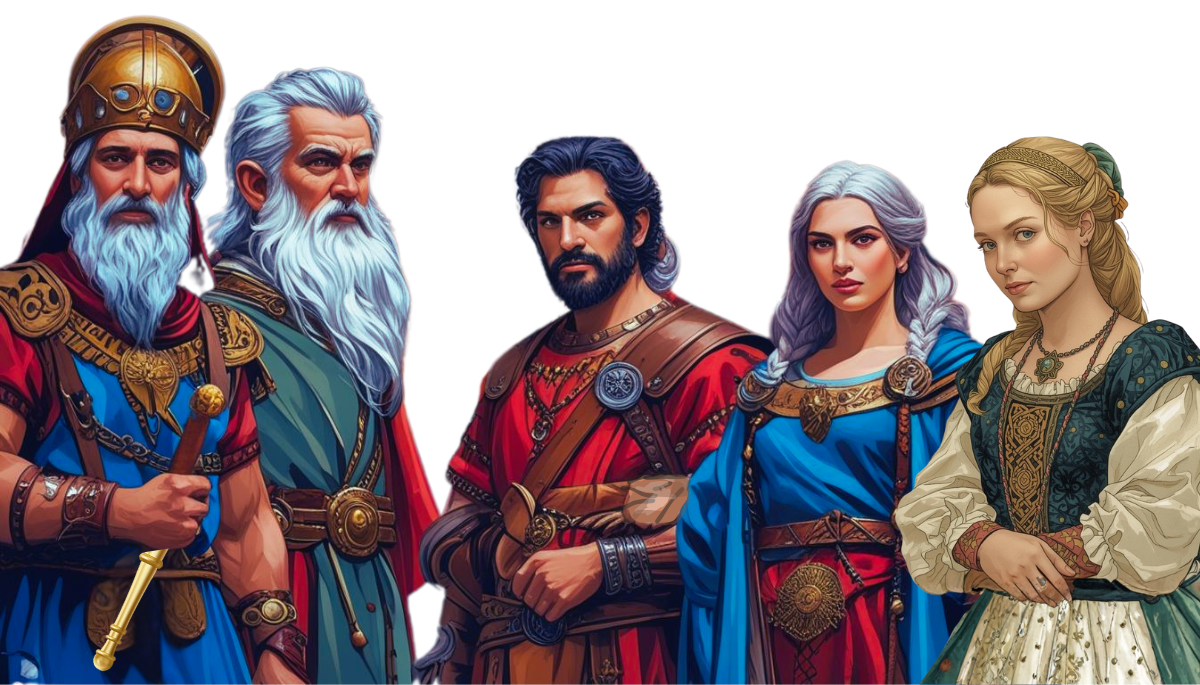
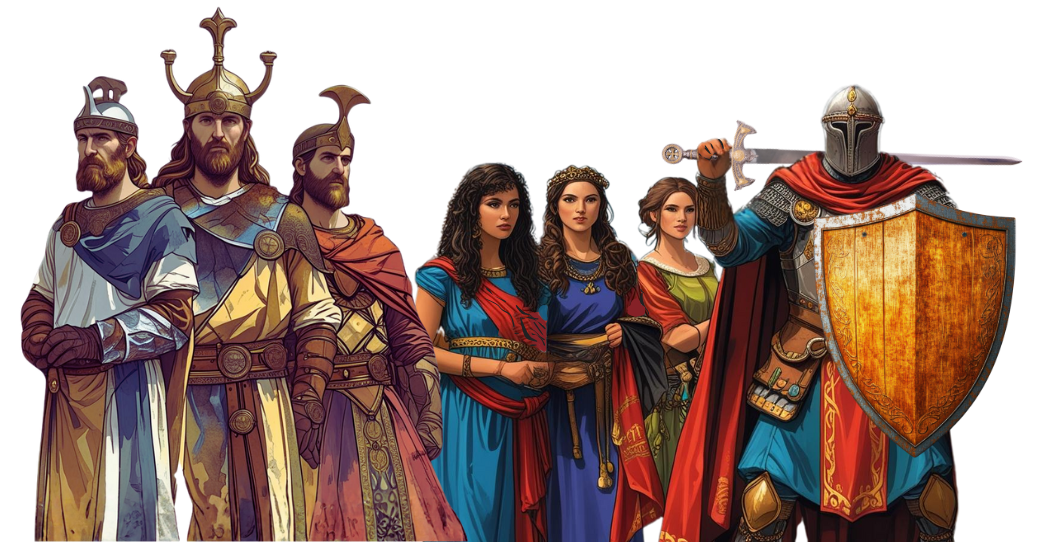
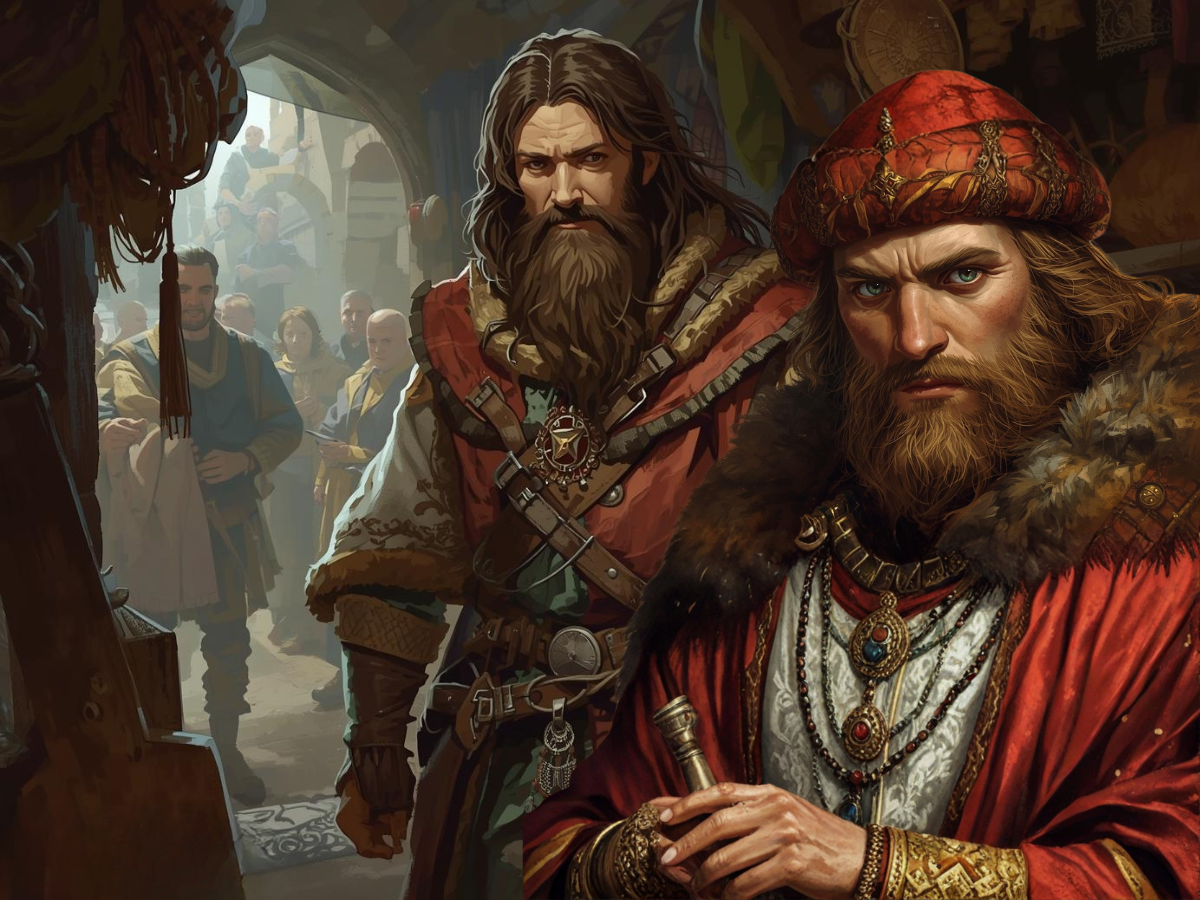
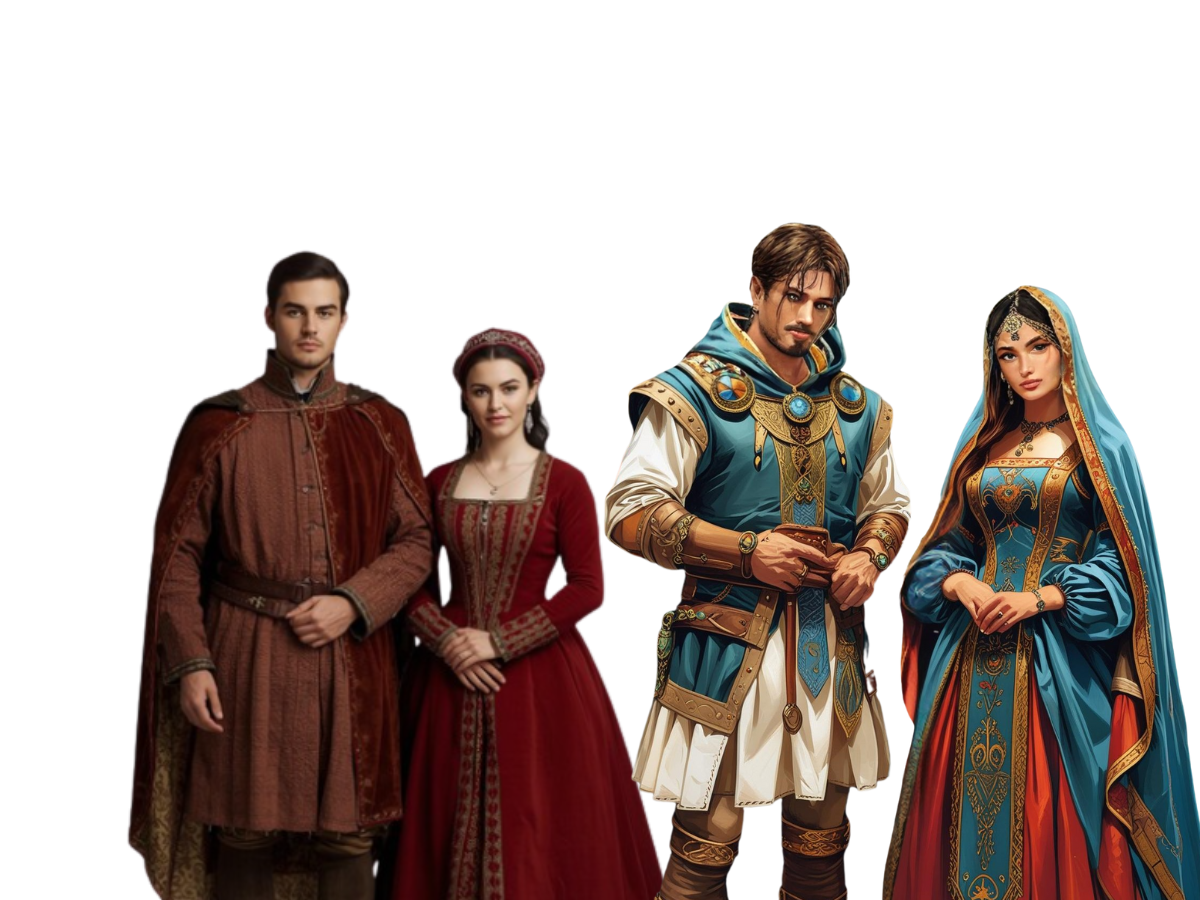
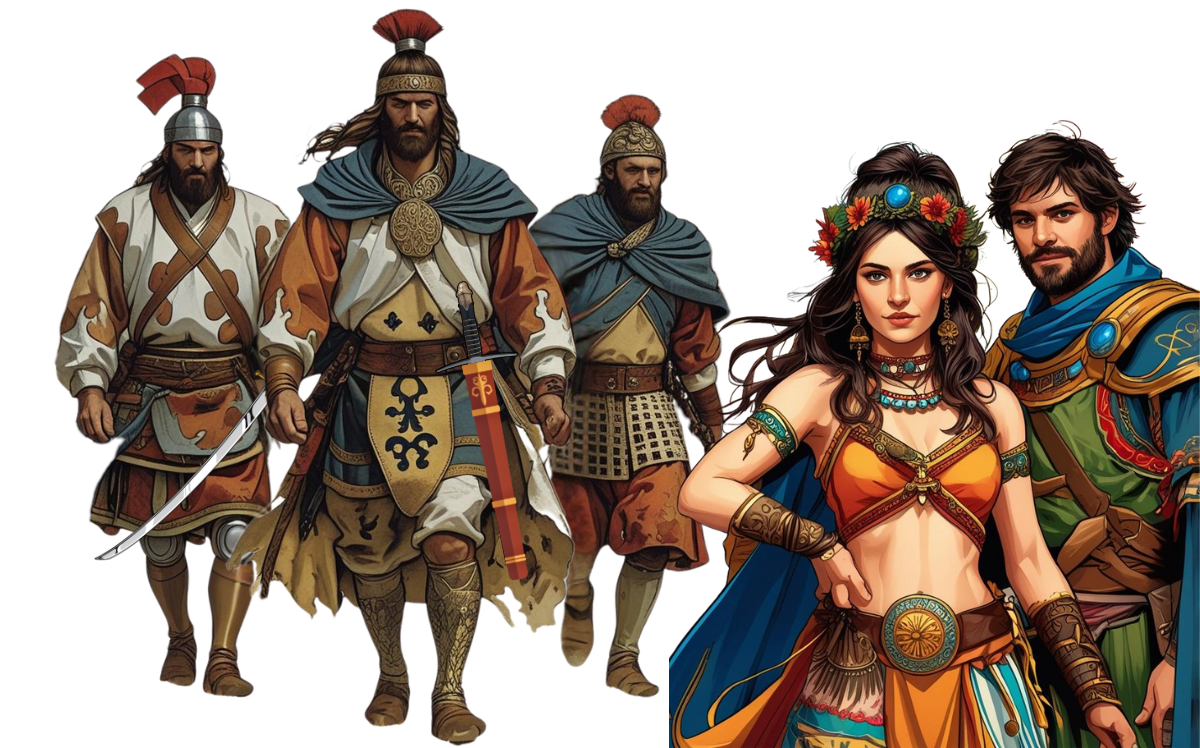
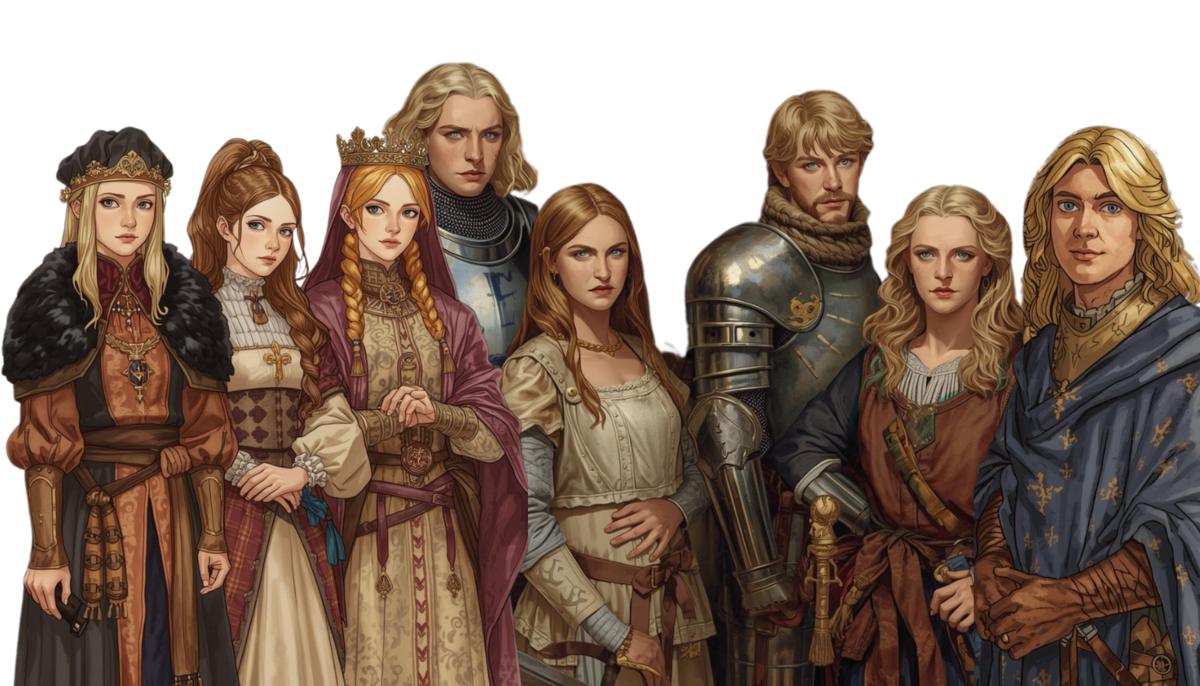
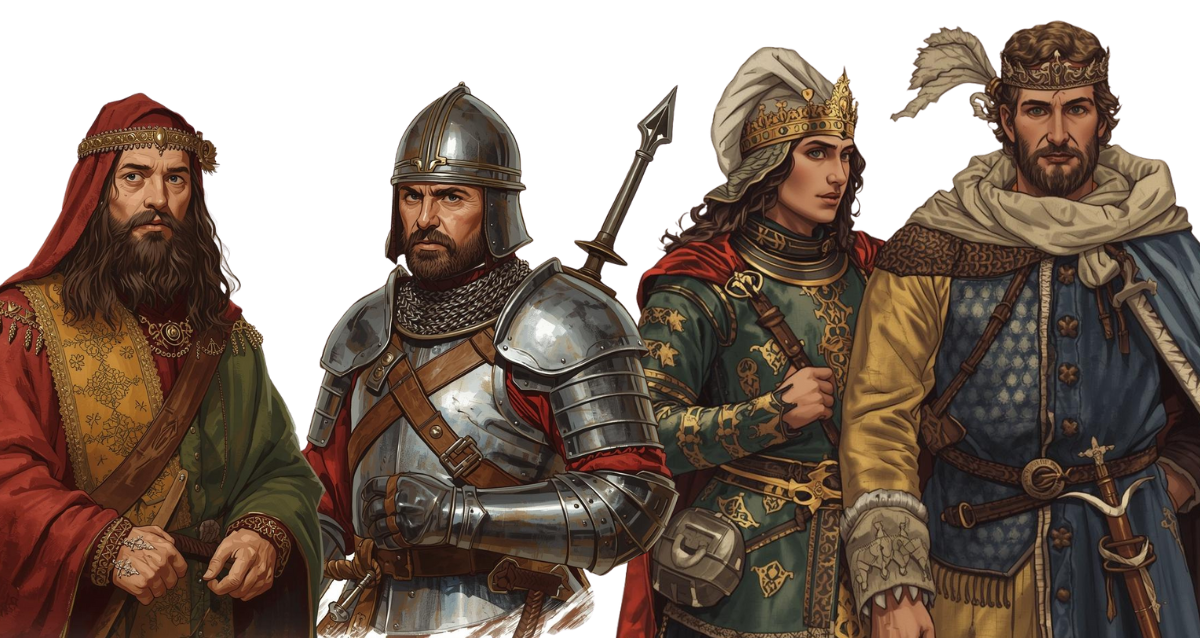
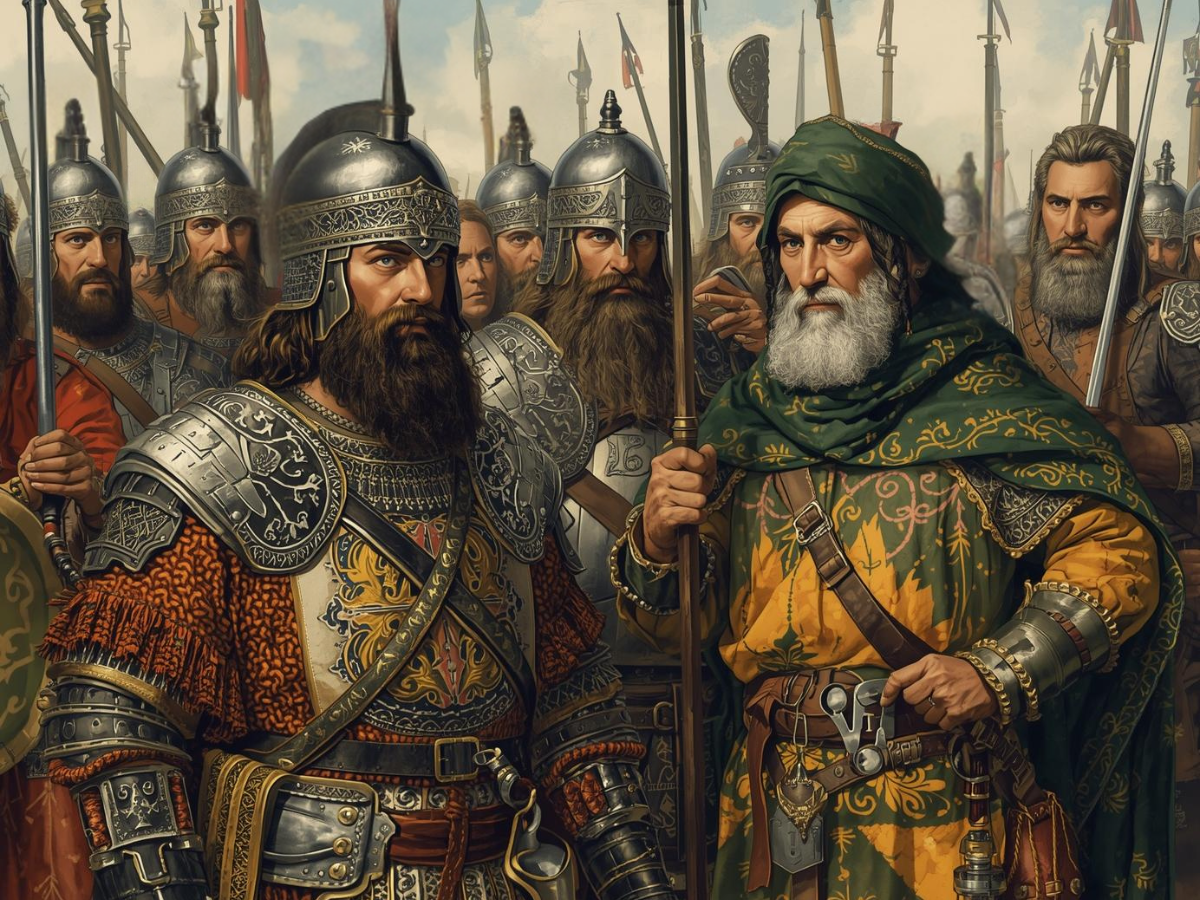
Gallery of human ethnic groups common to the northern regions of the main known realms. This will hopefully be updated regularly but we are approaching the busy season here in Pelleas.
One point to clarify is that ethnic groups or human subraces are usually - but not always - found in more than one geographic region or political territory. A good example is the Three Kingdoms of Gutheria, Maer Dane, and Ziliador, ruled by a Guth dynasty. Gutheria is the seat of power or principle crownland obviously comprised of the Guth people who migrated from the Old World over four centuries ago.
The Umbrige and Fzalt people still make up a large portion of the human population in this region and can be found in all three kingdoms and on the isle of Myrrha at all levels of society, from beggar to peasant or burgher, military, even high in the ranks of nobility. Likewise Guths may be found living in any of the three kingdoms and even on Myrrha.
The Hughs have also migrated in smaller numbers to the region but are less prominent. They can find influence as merchant families or through distinguished military service but so far have no lineage in the peerages of the region.
Glorms are another ethnic group found in northern Gutheria, Maer Dane and Myrrha. They are a minority with little influence on day-to-day life but they maintain their distinct culture in the communities they build.
Another minority are the L'wains. Once a medium-sized civiliztion exclusive to the Khelt riverlands they currently exists as a few scatttered families mainly in the midrealms but some can be found in southern Maer Dane as well.
The M’heta’un are the smallest ethnic group. These people are nearly extinct and will likely be gone in the span of a few more generations without some drastic series of events or a concerted effort on their part to multiply prolifically for the next several generations.
Sometimes in conversation or gallery images a person or group may be referred to by their residency (Maer Danian, et al) and other times people are referenced by their heritage (Umbrige, Hugh, etc.).
New text element